Wednesday, June 17, 2015

Keeping Your Water Safe from Algal Toxins

Avon Lake Regional Water works hard to provide safe, reliable, affordable water to your sink, toilet, shower, irrigation system—wherever and whenever you need it. All for about $1/day, we do this and then collect, clean, and return to Lake Erie the water you use.


One of the newest threats we protect you from is toxic algae. Water utilities, regulators, academics, and others are placing significant effort on improving understanding about microcystin and other toxins found in harmful algal blooms (HABs). Just last month, USEPA issued draft health advisory levels for microcystin. These health advisory levels are set to be finalized in June, and Ohio EPA is determining how to best implement them. Advisory levels are not regulations. They are guidelines. In establishing these advisory levels (guidelines) for microcystin, USEPA has published separate acceptable levels for children younger than school age and for all others. The guidelines have been set to where USEPA knows of no ill effects for people exposed to these levels for 10 days.

Avon Lake Regional Water monitors for microcystin in both the raw water coming in from Lake Erie and the finished water being sent into the distribution system and then to you. In 2014, microcystin was measured above detection limits in the raw water coming in from the lake only once. It was never measured above detection limits in the finished water we provide to you. Current predictions are for this year's algae bloom to be less severe than last year.

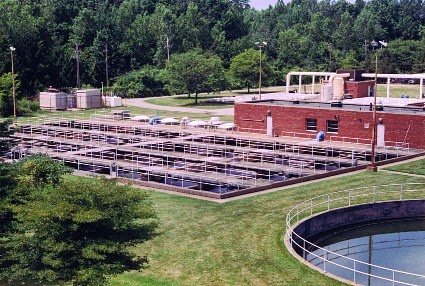
We are confident in our ability to remove microcystin through the treatment process. However, in case algal blooms get much worse (and to do double duty to help mitigate icing events), you will begin seeing major changes at our water filtration plant. Starting in July, a large hole will be excavated in the field across the street from the plant. That is where we will construct new clearwells that will store 2 million gallons of water for use during emergencies. During the next two years, we will construct these clearwells and additional pumping and emergency power generation facilities. We will also rehabilitate several filters to improve treatment ability and convert some existing basins to allow water to be recycled within the plant and reduce the burden on the wastewater treatment facility—thereby reducing our impact on Lake Erie.
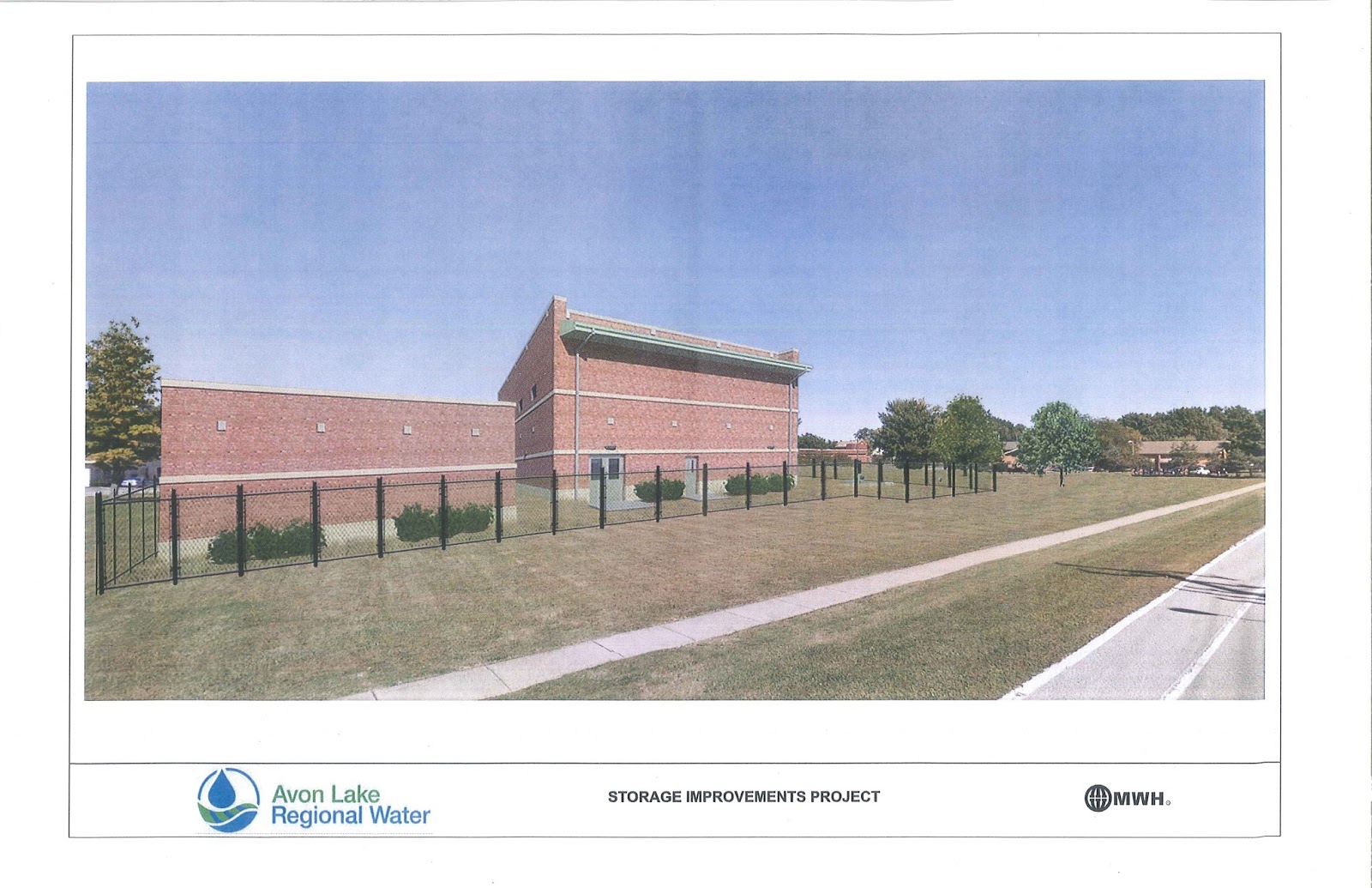

These improvements will be made using money from the state revolving loan fund. Through a competitive application, approximately $23 million will be loaned at a 0% interest rate. That will save our customers more than $250,000 per year for the next 20 years. We have also qualified for the 0%-interest loans for the 3 million gallons of elevated storage and the emergency interconnection with Elyria we hope to construct within the next two years. The 0% interest for these two projects should save an additional $100,000 per year.

During the past year, Avon Lake Regional Water has installed additional abilities to detect harmful algal blooms and microcystin, begun the construction of treatment and storage improvements, initiated design of an emergency interconnection with a neighboring utility, and started conversations for emergency interconnection with another utility. We strongly embrace our mission to provide the region with quality water services and strive to meet our vision of being a trusted and treasured community asset that enhances quality of life.


Avon Lake Regional Water is your water and wastewater service provider. Questions/comments? Contact us via phone (440-933-6226), email (contact@avonlakewater.org), social media (Facebook: /avonlakewater, Twitter @avonlakewater, Instagram: avonlakewater), or in person (201 Miller Road). You can also learn more by watching our semi-monthly Board Recap show on ALC-TV’s government channel (Time Warner 12 or WOW! 21) or logging on to avonlake.pegcentral.com to see recap shows or Board meetings. 

Thursday, April 16, 2015

The Worth of Water


"When the well is dry, we know the worth of water." Ben Franklin stated that in 1746. That was made all too real for approximately 500,000 in the greater-Toledo area last summer, when they could not drink their water for three days. Here in Avon Lake, we asked you to cut back on unnecessary usage at the onset of subzero temps—not the same, but not something we like asking you to do.

Some ask why I promote water conservation—irrigating only when necessary, keeping grass longer to shade roots, filling clothes and dishwashers before using them, installing efficient appliances… After all, the more you conserve water, the less revenue we receive.

I promote water conservation because I want to help break something called the "paradox of value (or the diamond-water paradox)." The philosopher Adam Smith wrote in 1776, "Nothing is more useful than water: but it will purchase scarcely anything; scarcely anything can be had in exchange for it. A diamond, on the contrary, has scarcely any use-value; but a very great quantity of other goods may frequently be had in exchange for it."

Nearly 240 years later, the same is still true. Water is something without which we will die. Yet, it costs less than a penny a day to get all you need to drink—about a dollar a day for the average family's needs—and that includes the costs to treat it and put it back into Lake Erie after you are done with it.

I want you to believe that is your best dollar spent each day. For that dollar per day, we are:
  • Removing algal toxins and other contaminants from the water we take from Lake Erie in order for you to drink high-quality tap water that meets all EPA standards;
  • Treating wastewater so that the water may be safely returned to the lake per EPA standards;
  • Maintaining and safeguarding the system to keep your water flowing without interruption, even during water main breaks.

During the recent past and foreseeable future, we will be continuing incremental rate increases to pay for new projects to make the drinking water system more resilient to icing, algae, and other issues; to improve the quality of treatment at the wastewater plant to reduce our contribution to Lake Erie algae;  and to separate sewers to reduce the frequency and amount of untreated sewage overflowing into the lake, which should help improve water quality at Veterans Beach and elsewhere.

We are incredibly fortunate to live beside 84% of the United States' fresh water. We take it for granted at our peril. With proper care and promotion, Lake Erie will be a reason industry considers relocation to Ohio and the Great Lakes region, especially as California, Texas, and other parts of the country continue experiencing some of the worst droughts (and highest water costs) in history. We want you to love your lake for all the things it means for your family and this area, from drinking water to recreation to tourism income. So, in 2015, we’ll be rolling out a “Love Your Lake” campaign to help remind you how much it means, and why you should help protect it. You will see more and more of it, leading up to our second annual Lake Erie WaterFest, happening August 8, 2015.

Thursday, March 19, 2015

The Future of Making Water Clean Again (Wastewater Treatment) in Ohio


On March 6, 2015, the Ohio Water Environment Association held its annual Government and Regulatory Affairs Workshop. It is a great event I enjoy attending every year because we hear directly from the top regulators in Ohio regarding their priorities and from others about hot topics. This year, the recurring theme was that it is time to act. This could be illustrated through the closing slide of the Ohio EPA (OEPA) Division of Surface Water Chief, Karl Gebhardt, which simply stated:

"Rhetoric is no substitute for action."
-Teddy Roosevelt

Fully an hour-and-a-half was provided to OEPA Director, Craig Butler, and OEPA Division of Surface Water Chief, Karl Gebhardt. Their two presentations focused on OEPA's restructuring to put "the right people in the right seats" and embrace "Lean Ohio," which is intended to make government simpler, better, faster, and less costly. The Director spoke a lot about OEPA restructuring to have two doors into which the regulated community such as wastewater treatment organizations would enter: one is for technical assistance and the other is for regulation and enforcement. They want to entice as many organizations as possible to enter through the technical assistance door (carrot) because the regulation/enforcement route is much less pleasant (stick). (My words, not theirs.)

Director Butler stated that 2014 was The Year of Water due to the events that happened in Toledo and elsewhere, and the OEPA 2015 priorities focused on water. Regarding Lake Erie, he stated that "the first flush is like a hypodermic needle into the watershed" regarding non-point source pollution. OEPA is working with the farming community to help reduce nutrient loading coming from farm fields. They are equally focused on the impacts septic systems and wastewater treatment plants have on receiving waters. They believe through improvements by all parties, positive steps will be made. Regarding Lake Erie, Director Butler said, "It's taken us a generation to get into this problem, and it will take us a long time to get out."

It appears that Ohio is committed to improving water quality and realizes that our economic future will be significantly impacted by water. To illustrate this, the OEPA Division of Surface Water Chief compared the economic potential of other countries to Ohio and the Great Lakes by stating:

"They have the oil, but we have water."
-Karl Gebhardt

The theme of acting now to help improve our future was further reinforced by David Rutter from the Mid-Ohio Regional Planning Commission in his presentation about a study performed regarding the potential impacts to the region due to increased climate variability/extremes. He talked about implementing "No Regrets" strategies. "No Regrets" strategies are strategies people have no regrets implementing even if the primary reason they are implementing them does not come to pass. For example, buying Ohio wind energy reduces carbon footprint and also invests in Ohio's economy. By investing in Ohio's economy, people have "no regrets" in purchasing power that might be more expensive. Another example would be utilities purchasing properties along water courses, razing the buildings, and building "stormwater parks." Even if flooding does not get worse and those properties are not flooded in the future, the public benefits of the parks would be worth the investment.


There were several other important talks at the Government Affairs Workshop that could be topics of other blogs. They will not be described here because I do not want to dilute the importance of the message in this blog: The time to act is now. Utilities and jurisdictions should start independently making steps forward, not only because it is the right thing to do, but also because they will be required to do it anyway in the near future. Acting now allows for utilities and jurisdictions to be in charge of their own destiny.

Tuesday, February 10, 2015

Water: The Unsung Hero of Health

As I am sitting in a chair, having iodine placed on my arm, preparing to donate blood, I am reminded of the inextricable link between water utilities and public health. Just as the iodine swabbed on my arm prevents infection, so does the chlorine we add to drinking water. Did you know that the Centers for Disease Control (CDC) named the chlorination of drinking water one of the ten greatest public health achievements of the 20th century? Typhoid and cholera are now virtually non-existent in the United States due this fact. Fluoridation of drinking water also rated inclusion in that ten-greatest list. Water utilities are responsible for one-fifth of the list. That’s a powerful illustration of how water and good health are inextricably linked.

In the spirit of these life-saving water-utility pioneers, Avon Lake Regional Water will be undertaking several projects this year to better protect your health by improving the way we protect your water supply and your lake.

First, we are working to expand the amount of water we can access for you. We are doing this two ways. One is a drinking water storage project that will provide five million gallons of additional drinking water to have on hand for emergencies. The other is an interconnection with a neighboring water system that will give each water utility access to the other’s water in times of need. Expanding our emergency water supply is an important safeguard. Not having water at your house for a small amount of time may seem like a huge inconvenience, but just consider the impact of a water outage on hospitals, fire hydrants, and those with medical conditions requiring handwashing or sterilization. Continuous water is a necessity for them. No one can predict the future, and this project will put us in position to handle extreme water needs in a wide variety of scenarios.

Second, we are undertaking multiple water line replacement projects this year. Replacing aging lines subject to breakage means a more reliable water supply (we have to shut down water service to your home during the process of repairing your water main). Moreover, one water line project this year will restore the capacity of the water line, allowing a much-improved flow for fire-fighting purposes.

Third, we will be starting a rehabilitation project at our wastewater treatment plant. The rehabilitation will both reduce the amount of water that bypasses our plant during wet-weather conditions and improve the level of treatment of water flowing through the plant. This, in turn, will improve the quality of water we discharge into Lake Erie, therefore better protecting you when you want to enjoy the lake.

Finally, we have begun planning the next combined sewer separation, which will be in the Fairfield-Brookfield area, breaking ground in 2016. Once this project is completed (2017), the quality of water in Heider Creek should improve, eventually helping to improve water quality at Veterans Park Beach—Avon Lake's beach that typically has higher bacteria counts after rain events.


As always, we are undertaking these projects to better serve you and ask for your patience if you are ever inconvenienced by them. We hope you agree a reliable water supply (including a healthy lake) is worth investing in.

Avon Lake Regional Water is your water and wastewater service provider. Questions/comments? Contact us via phone (440-933-6226), email (contact@avonlakewater.org), social media (Facebook: /avonlakewater, Twitter @avonlakewater, and now Instagram), or in person (201 Miller Road). You can also learn more by watching our semi-monthly Board Recap show on ALC-TV’s government channel (Time Warner 12 or WOW! 21) or logging on to avonlake.pegcentral.com to see recap shows or Board meetings.

Tuesday, January 20, 2015

Looking for a Few Good Men/Women

What are your thoughts about water and sewer? Do you care about the quality and cost for your water? Do you want to serve on the Board of Municipal Utilities?


Avon Lake Regional Water is your water and wastewater service provider. We’ve provided service for more than 85 years and intend to do so indefinitely. To assure that we are making decisions in your best interests, we are governed by a five member Board of Municipal Utilities. The Board is elected by you to four year terms. Recently, one of our Board members announced he is resigning. The Board is seeking candidates to fill the remainder of his term, which ends December 31, 2015.

 At its January 20, 2015 meeting, the Board will discuss how it wants to fill the vacated position. Because the term expires at the end of this year and the position will be filled in January 2016 by someone elected to it on November 3, 2015, the Board may give preference to those who submit a Nominating petition and Statement of Candidacy to the Lorain County Board of Elections by February 4, 2015.

Do you want to give back to your community? Do you want to assure that water and wastewater rates are appropriate? Do want to assure that the quality of your drinking water is excellent or the quality of the water returned to Lake Erie remains high? Do you want to assure that the level of service related to the City’s water and wastewater systems is memorable and the systems are maintained appropriately? Then maybe you should apply to serve on the Board of Municipal Utilities.

The Board of Municipal Utilities meets twice per month to assure that staff’s decisions best balance quality, quantity, cost, and service. The Board approves expenditures and contracts, sets rates, establishes policy, and provides input. The Board helps to set strategic direction for the organization.

Board members’ life experiences help them oversee operations of the utility. Current Board members include an engineer, a lawyer, a business owner/former City council member, and another business owner. The Board is looking for people with skills to complement those already on the Board. Obvious complements could be public relations, contracting/ construction, industry, human resources, entrepreneurship, environmental science, development… This list is in no way exhaustive. The most important aspect is to have a genuine care for helping the organization become even better for Avon Lake.


The Board is asking for candidates to send a statement of interest (cover letter) and resume to Todd Danielson, Chief Utilities Executive, at tdanielson@avonlakewater.org. The Board will make an initial screening of potential applicants most likely after the February 4, 2015 candidacy filing deadline. Commitments for Board members include preparation for and attendance at two Board meetings per month, as well as at some other meetings throughout the year. The Board holds a summer recess from mid-July through mid-August.

To learn more, check out our website and review our annual report. Peruse our social media sites: Facebook, Twitter, and PegCentral (look in the ALMU Board Recap and ALMU Board Meetings folders). Feel free to call Todd Danielson at 440-933-6226 with specific questions.

Thursday, December 11, 2014

Is 5¢ per day a lot of money?


At its December 2, 2014 meeting, the Board of Municipal Utilities voted to increase water rates by three percent both this summer and next. (Here's a piece about it: http://alwtr.us/RatesPress) That’s a lower increase than most utilities in Ohio and across the country see each year (nationally, water rates are increasing at nearly 5 percent annually). Why? Avon Lake Regional Water’s focus on regionalization. Because we sell water to other communities, we distribute much of our fixed water costs among a larger user base. As a result, we are able to keep annual increases roughly in line with inflation—even though we have other rising costs in addition to inflationary ones. Therefore, regionalization and our ability to find ways to save money keep our rate increases among the country’s lowest.


On the wastewater side, our regionalization now means we get approximately 15% of the flow we treat from outside our city limits. We have a strong partnership with the Rural Lorain County Sewer District (LORCO) and are working to add customers to help save all our customers money. This coming summer, wastewater rates will increase 7% to help pay for sewer separations and to rehabilitate our wastewater treatment plant. We anticipate similar increases for the next several years as we undertake approximately $25 million in sewer separation projects and $40 million in plant rehabilitation/improvements. Note: Through an agreement with Ohio EPA, Avon Lake’s sewer separation projects must be completed by 2020. In order to help them continue to move forward, early this year we offered to stop receiving approximately $500,000 per year from the City of Avon Lake in income tax revenue so they could use it to fund stormwater improvements they would like to undertake as we give them the former combined sewers to use as storm sewers. Giving up this revenue source places the entire burden of rehabilitation and capital improvements (as well as that of operations and maintenance) on us—meaning the revenues we receive from the bills you pay. We do not receive any of your income tax dollars.

The average Avon Lake residential customer pays a total of about $1 per day for water and wastewater services. The combined increases coming this summer for water and wastewater rates will increase your out of pocket expenses by about 5¢ per day ($20 per year). If you want to offset that increase, you need only decrease your daily water usage by 10 gallons. Run clothes and dishwashers only when full. Turn off the sink when brushing teeth and shaving. Wash dishes in a dishwasher rather than hand washing under running water. Have each family member take a shorter shower. Reduce toilet flushing volumes by placing a rock in the toilet tank. Irrigate a little less. Switch showerheads and other fixtures to low-flow varieties. These are all things that can save enough water to offset the additional expense of this rate increase. (Watch vids here to learn more: http://alwtr.us/vid2C).


We work hard to keep your rates as low as practical and provide you with high-value services. Recently, the 2013 Ohio EPA Sewer and Water Rate Survey was published. Avon Lake residents’ water bills rank in the bottom 1% statewide, and wastewater bills rank in the bottom 10%. When Avon Lake’s water and wastewater bills are compared to those of other cities with a population of 20,000 to 30,000 (like ours), Avon Lake bills are the lowest. In fact, Avon Lake residents save more than $500 per year compared to the average water and wastewater bill in those cities. No one likes rising rates, but that’s the world we live in—and at least you live a city where the water is so comparatively inexpensive you are already saving $500 every year. 

Wednesday, October 1, 2014

What is the value of water?

In early August, Thomas Fuller's words, "We never know the worth of water till the well is dry,"  became abundantly clear for 500,000 greater Toledoans. Last week, USEPA Administrator Gina McCarthy referenced the Toledo incident in a speech in front of 18,000 water professionals saying, "It's 2014, folks, 2014, in the most prosperous nation on Earth. Yet for two full days, thousands of families couldn't access life's most basic necessity. Now this is what one would call a wake-up call."

(Source: 13abc.com)
 
Water: Essential to life and economic prosperity. Don't think so? Try living without it. Think about industry. What industry would exist without water? Almost every major city was founded where it was due to access to water. Not only did ancient Rome have a god of fresh water and the sea—Neptune—but they also had a goddess of the sewers—Cloacina. (An aside: Cloacina was also the protector of sexual intercourse in marriage. Perhaps Romans recognized both reproduction and proper disposal of wastewater were equally vital for the human race?)

(Source: sewerhistory.org)

Yet, despite water’s undeniable value, the average U.S. citizen only pays about $2.75 a day for water and wastewater service for his/her family. (Reference: http://alwtr.us/10lAZE2, http://alwtr.us/1pGfXVs) That is probably about the same as what that person pays for cell phone service.

That said, this blog is not about wanting you to feel good about the price you pay for water service. This is written to encourage you to do your part to protect what is essential to life—your water. Here in Northeast Ohio, that means protecting Lake Erie and all its tributaries, but our actions combined can make a big impact beyond our region, too. Your part goes beyond proper fertilizer application and making sure your mower blade is not set too low. It goes past buying water- and energy-efficient fixtures and appliances, irrigating only when necessary, and using sound watering principles. Your part really starts with using the power of the purse—buying products that protect or improve the environment, as well as supporting companies who do the same. Your part means asking yourself if you really need to buy bottled water, which consumes a lot more water to produce than each bottle actually contains. Add to that the unrecoverable fossil fuels consumed and pollution emitted by the trucks that bring that water to market, the plastic bottles that will end up in landfills (still around 70% of those sold), and the energy consumed to store and sell that water… then ask if that bottled water is really worth it. Your part also includes a more active role in the political process—voting for politicians that support clean water and making sure those politicians make and pass laws that do just that.


In writing this, I am standing high on my soap box, expressing opinions that are not necessarily the official view of my organization. I don't expect you to feel as strongly as I do. Gandhi said, "Be the change that you wish to see in the world." I am only asking you to consider my words, reflect on them, and decide what change in this world you want to help effect. Hopefully, you’ll add our water supply to your list of important causes.